A Dirt-Based Community

My Track and Sign Evaluation in Montana

I’ve been interested in wildlife tracking for many years. Early in my biology career, long before widespread online learning, my only tutelage came from hunting lore, cheap reproductions of 1970s-era military manuals, and tales of mountain men and native Americans.

In the beginning, I found the idea of tracking to be akin to magic. A skilled person could rise in the morning, cast a glance out the window, and know which animals passed nearby overnight – and even determine their behavior. I’ve not changed that initial opinion much over the decades. Tracking presents an unparalleled window into the natural world and is open to anyone who chooses to pay attention.

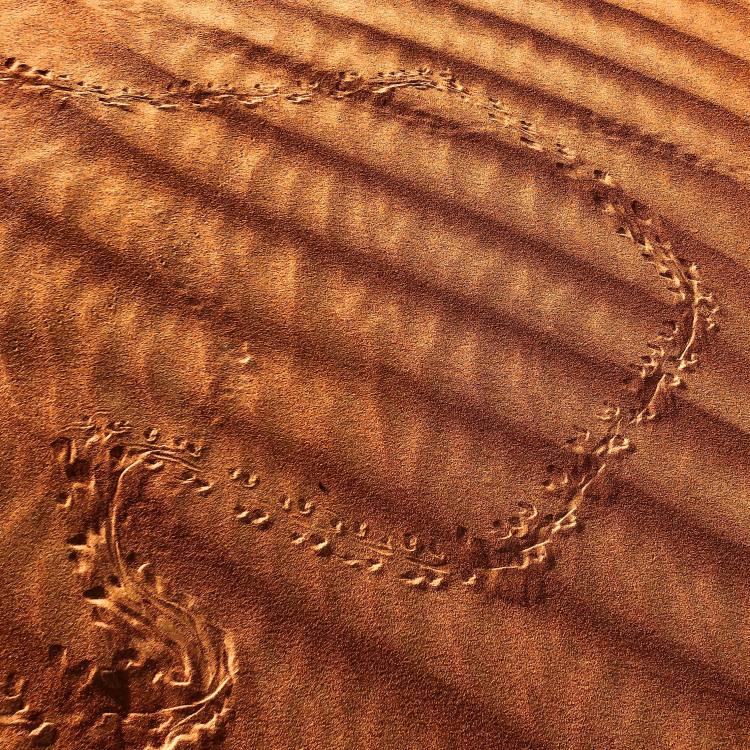
Paying attention, I should note, involves a lot of ‘dirt time’ – hours spent close to the ground, peering at disturbances in mud, dust, soil, or snow, closely examining bent grasses, leaves, scratch marks, rocks, and scat (scat in this context is a euphemism for animal poop; see ‘civilized’, below).

There are people who can scan a landscape and read the signs before them quickly and with ease, much like the birders who can sit on a park bench and identify hundreds of bird species by song. For the record, I am not one of those people. I require a lot of time and practice (see ‘dirt time’, above).

I’ve traveled from coast to coast for work. On average, the civilized residents of North America appear to consider playing in the dirt to be a strange, possibly suspicious activity for an adult. In more cultured environs, I noticed . . . discomfort. In the presence of a man sitting on a trail, staring at the ground, people shielded their children and joggers turned around. I tried to smile or say ‘hello’ but people fastidiously avoided eye contact as they scurried by.

Over my career, I did notice some variability. Hunters often respect tracking as a tool towards very practical ends, naturalists can be more philosophical about it, while many (though certainly not all) PhD researchers find statistics and satellite imagery much more applicable to the field of wildlife study than subjective interpretations of marks on the ground.

Most recently, as people poured outdoors due to COVID-19, my unpredictable positioning on the landscape and slow progress infuriated newly-dedicated bikers and gym-deprived runners. The obsession with exercising outdoors suggested a problem with anyone who wasn’t moving fast enough.

Over time I withdrew. I unconsciously internalized the idea that tracking was best done alone and, preferably, when no one was watching.

While on a job in Montana, I noticed a Track and Sign evaluation, offered through Cybertracker North America, was being held nearby. I was intimidated by the idea of subjecting myself to a potentially embarrassing public assessment, but I finally decided that I couldn’t pass up the opportunity.

I arrived in the Swan Valley with a worn, dog-earned track guide in my pocket and a head full of doubts. Over the next two days, I was continually amazed by the ability of those around me to read the land. That was somewhat predictable; I expected a skilled evaluator.

More surprising to me was Michelle’s infectious passion. She, along with staff from the Swan Valley Connections, the organization hosting the evaluation, didn’t see tracking as an eccentric hobby. They were natural resource professionals who extolled the virtues of tracking to anyone who would listen. These trackers didn’t hide. They tracked whenever and wherever they could, following trails in the evening or stopping to mark tracks on their way to work in the morning. They didn’t isolate themselves. These trackers welcomed people into their world and occasionally married each other. When I struggled during the evaluation, they supported me.

I was apprehensive to attend an evaluation, yet I walked away determined to attend additional sessions. I was profoundly affected by the experience. I learned a great deal about tracks, yes, but I was also stuck by my brush with something larger.

I’d become aware of many tracking schools and books and skilled instructors during my travels. Yet it wasn’t until I stood in what Wikipedia calls ‘an isolated valley between the Swan and Mission mountain ranges’ during Michell’s evaluation that I recognized the possibility of a tracking community that was as welcoming as it was challenging. I glimpsed a community that encourages complete neophytes and moderately-experienced oddities like myself, accepts them into the ranks along with the undeniable experts, and strives to raise everyone up.

I admit that my path has been, and continues to be, unconventional. However, I’m convinced that the importance of such a tracking community can’t be understated. I encourage anyone who practices this ancient skill (expertly or poorly), wants to encourage other trackers, or simply sees the value of tracking as a skill to bring people closer to nature, to support the efforts of the people and groups I’ve mentioned, including Cybertracker and Cybertracker North America, in any way that you can.
Running in Slow Motion

“Yeah!” I shouted as I crested the hill. “Oh, yeah! That’s how it’s done!”

A dozen pairs of liquid brown eyes watched me as I reached the top of our rural Pennsylvania driveway. The neighbor ladies were unaccustomed to such outbursts because I usually ran in silence. They observed me for a moment from behind long lashes and then, according to some unspoken signal, returned to their business.

While the lovely ladies were eminently capable of outrunning me, and dedicated vegetarians, it might surprise you to learn that our neighbors are not especially health-conscious. In fact, I caught one girl chewing on a plastic bottle last week. Perhaps I should mention that these neighbors are cows.

I continued the cool-down portion of my run, serving as both a reward for reaching my goal and a requirement of documenting the effort (I simply cannot use the tiny face of my FitBit while running). I’ve quickly developed a love-hate relationship with the little thing but that is a topic for another day.

My celebratory shout was short-lived and, honestly, rather wheezy. I had finished another training run on my way to an eventual 5K trail run in a nearby park, scheduled for the summer solstice. I experienced some chagrin when I began ‘training’ to run a distance of 3 miles, since it seemed but a few years ago that I could hike 10 miles with a 60-pound pack at 7000 feet above sea level. 

Age and pandemics and unemployment and way too much sitting had taken their collective toll – by Christmas 2020, I was in the worst shape of my life. I had to do something. In the spring, once we were free from the necessity of awaiting our landlord’s front-end loader to clear snow from our driveway, I began running. I had no real goal in mind until I saw a flyer for the solstice run.

I’ve hiked all my life, and run in a few road races, but never done much trail running. Indeed, I spent too many years in the intermountain west, where I saw trail running as a great way to surprise bears, cougars, moose and elk, which never ends well (here is a really good article about just such an encounter and all the resulting problems. And it references a well-regarded bear biologist I met years ago when she was doing research in Big Bend National Park!). When I relocated to the east, I knew the risks of such wildlife encounters were minimal but the narrow, winding roads of rural Pennsylvania and general state of distracting driving in the world today left me unwilling to run on the asphalt.

As a result, I have run many miles around our rural property as well as up and down our driveway. These endless circles are a source of curiosity in an agricultural landscape. Farmers peer from tractor cockpits crowded with computers, staring in wonder at someone who has to time to exercise. The woman across the street watches with bemused interest as she tends her garden. Bleary-eyed long-haul truck drivers, leaving the local warehouses, do a double take. By far, the cows are my most interested neighbors, running to the fence to watch me, chasing me, then eventually losing interest until I circle back again.

Finding time and energy to train has not been easy, as I work six days a week at two jobs for 50+ hours. As the neighbors and cows can attest, though, I’ve put in the work. The plodding, wheezing, stumbling work. As my runs get longer, hotspots are broadcasting blister locations and my psyche retreats further from the pain (hence the uncharacteristically jubilant outburst at the beginning of this tale.)

I won’t have the cows cheering in late June but a few friends are promising to show up. I’ve already warned them that this run will not be a pretty one. My goal is to finish, complete with bad form, a fair to terrible race time, and no fanfare. I can explain this objective in no more simple terms than this:  I will finish this race.

No matter how I get there – whether I arrive strong and happy or crawl across the finish line – my arrival will be worth celebrating.

Rattlers: A Different Perspective

As a wildlife biologist who grew up in Texas, I read Orion magazine’s feature, A Uniquely American Animal, expecting the usual sad descriptions of the destructive and bloody rattlesnake roundup carnivals. Everyone knows that snakes suffer a withering animosity as old as humanity. It comes from the fear that our primate ancestors felt towards venomous, and legitimately dangerous, snakes. Every human across the globe shared these ancestors and this primeval fear has stayed with us. But over uncountable generations the fear has silently morphed, seamlessly arising as respect in some people and hatred in others.

The roundups and their casual brutality towards living things is, unfortunately, old news. I was unprepared for the invocation of lynching imagery, which I can only describe as indescribable. A discussion of the Gadsen Flag was unavoidable, given our political climate. In her descriptions of the rattlesnake images on war flags, or in song lyrics read by a madman, Natalie Rose Richardson paints the rattlesnake as the symbol of a violent nation.

Continue reading “Rattlers: A Different Perspective”

Timber Wars

Listening to Oregon Public Broadcasting‘s 2020 podcast Timber Wars was, for me, like traveling in time. Although I was an insignificant cog in the grand wheel of the controversy, I was witness to some of the drama. It was a brief, important experience that has resonated through my life. As a young outsider, I was perhaps ill-equipped to recognize the complexity and nuance of what was happening in and around those old growth forests, but I was a witness nonetheless.

Continue reading “Timber Wars”

The Story of a Queen

Most of my life has revolved around animals. That covers my years with wild animals as a wildlife biologist but also includes work at several domestic animal shelters. This is a story about a queen who lived at one such shelter.

Continue reading “The Story of a Queen”

Relocating Commotion-Causing Beavers

This piece was written in August of 2018 for the Utah Division of Wildlife, where I worked as a biological technician and staff wildlife biologist.

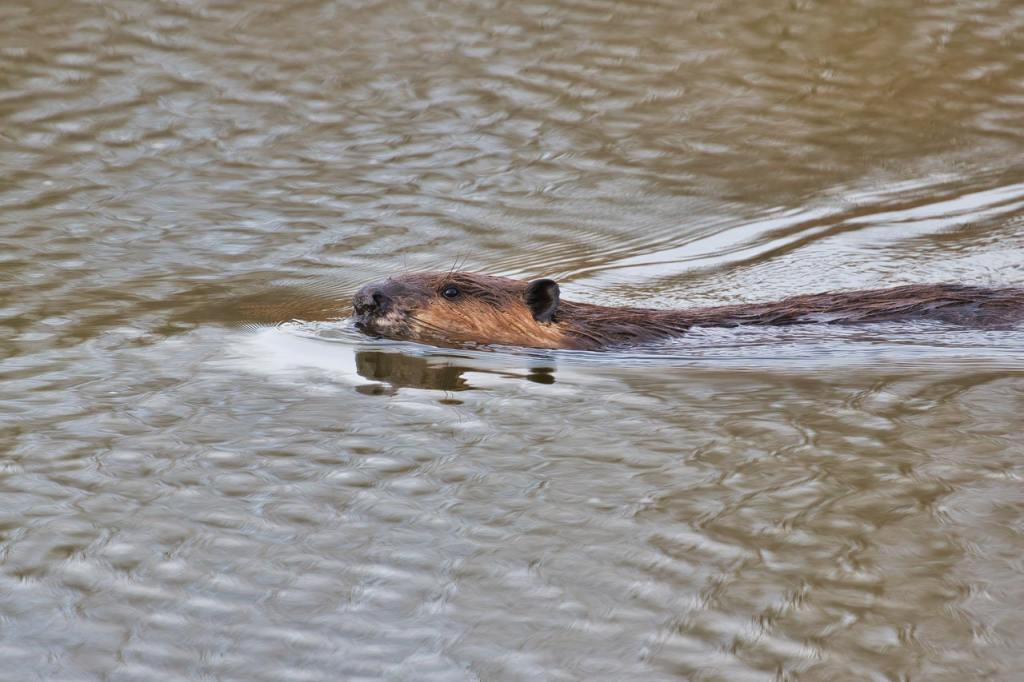
Many Utahns have experience with beavers. Unfortunately, much of that experience is less than desirable: beavers plugging up culverts, chewing down trees and flooding parking lots. The reality is that beavers can be a problem when they’re stuck in the wrong places. The flipside is that beavers are very beneficial when they’re in the right places.

Continue reading “Relocating Commotion-Causing Beavers”

The One that Got Away

This piece was written in 2017 for the Utah Division of Wildlife, where I worked as a biological technician and staff wildlife biologist.

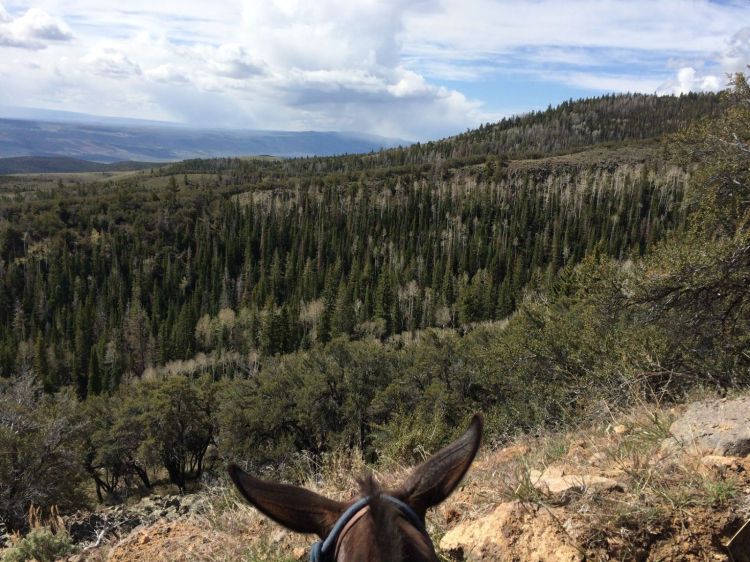
It was May. I looked to the east, idly wondering whether or not I could see the tiny community of Koosharem, Utah, from our position on Monroe Mountain. My vantage point was elevated that day, as I was not only on a mountain, but atop a mule on a mountain. It had been a long hard day and the animal’s mood was characterized by a desire to return to the trailer.

I was tired as well but I had enjoyed the day. We had left the truck and trailer that morning in search of a female mountain lion who needed her collar changed. This happens when animals grow, as is often the case when bear cubs are collared, or when a collar’s batteries are nearing the end of their expected lifetime. The goal was to catch her, remove the old collar and put on a new one.

Dogs are key to this process. Given the age-old animosity between cats and dogs, lions generally flee and eventually climb a tree when pursued by canines. Properly trained hounds have the discipline and gravitas to keep the cat treed until the panting humans arrive. A sedative-filled dart is shot into the large muscle mass of the cat’s hindquarter. After it succumbs to the drug, one lucky crewmember gets to climb the tree and either carry the lion down or attach a rope in order to lower the cat down to the ground. Sufficient time is given for the cat to relax and slip into unconsciousness, for it would be jarring indeed to climb a tree and meet a half-asleep (and therefore half-awake) mountain lion.

The group that set out to accomplish this goal contained four people:  Three employees of the Utah Division of Wildlife Resources (DWR) – Dr. Annette Roug, the state’s wildlife veterinarian, myself, and a predator specialist, Clint Mecham – in addition to Peter Mahoney, who was at that time a PhD student studying the cats. The group was rounded out by several hounds and four mules whose names I’ve since forgotten.

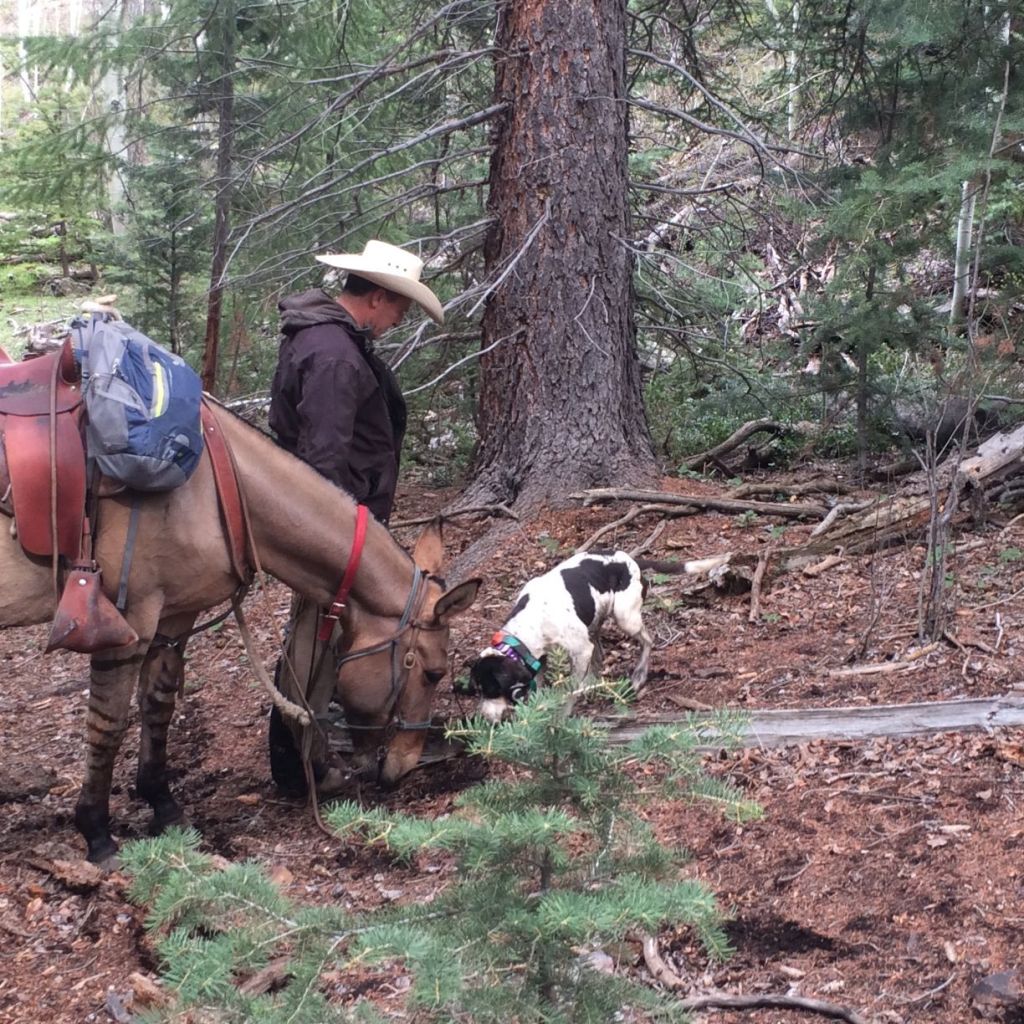
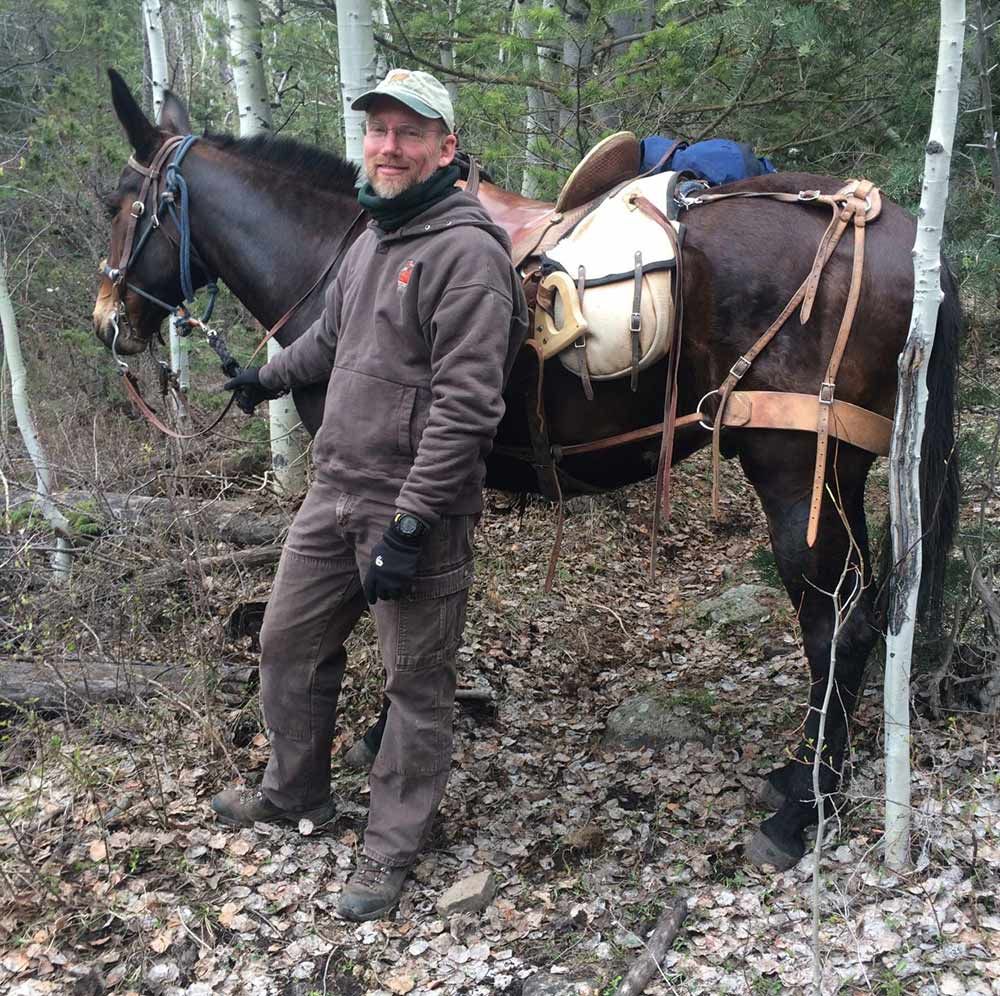
Clint and his mule observing hound as dog searches for cougar scent
Clint Mecham in his element (photo by Dr Annette Roug)

We reached a ridgetop and again broke out the telemetry gear. Clint watched his hounds critically for their input as where this cat might be. We determined that she was on the next ridge over. It seemed tantalizingly close but was in reality separated from us by a deep, heavily wooded drainage.

She’s out there somewhere

I learned the value of mules that day. As we climbed over fallen trees, weaved between the creaking, leaning trunks known poetically as widowmakers, and ducked under logs, the mules followed without complaint. Their attitudes about the situation may not have joyous but I was impressed. I suspect that a horse dropped into that mess of fallen timber would have rolled up its eyes and died on the spot.

Dr Roug on Monroe Mountain

I myself felt a twinge of hopelessness when looking at the downfall surrounding us on all sides. But I knew from prior experience that following lions is rarely easy in mountainous terrain. And I had the utmost confidence in Clint. He was comfortable in the backcountry after decades of experience and led the way as his hounds snaked back and forth amid the legs of our mules.

Our position in the drainage meant that our telemetry signals were bouncy at best and even the dogs weren’t having much luck. There was nothing to do but get to that next ridgetop. Once there, we could formulate a plan as to how best approach her position.

It took time, and more climbing through the ever-present downfall, but we eventually approached the top of the ridge. We were all ready to be done with fallen trees, as evidenced by the fact that my mule was using his head to push me out of the downfall zone.

We topped the ridge with a palpable sense of relief. Peter slowly rotated around, using the telemetry antenna to seek the strongest signal. I noted with some consternation that when he found the signal, it was coming from the wrong direction. Clint consulted his hounds. The dogs’ noses agreed with the beeping telemetry receiver:  the cat was behind us, likely on the very ridge we had left a few hours ago. While we were toiling to reach her location, she was silently gliding past us, determined to keep at least one drainage between herself and this bothersome group of humans, mules and dogs. It was afternoon already and we knew it would take us too long to return to that ridge. Basically, she skunked us.

“Atta girl,” I said quietly into the cool mountain air. My mule’s ears swiveled around. The animal was likely confused by the strange mix of disappointment and respect emanating from his rider. After all, we’d come all this way, ridden and hiked for hours to catch this cat and we’d missed her.

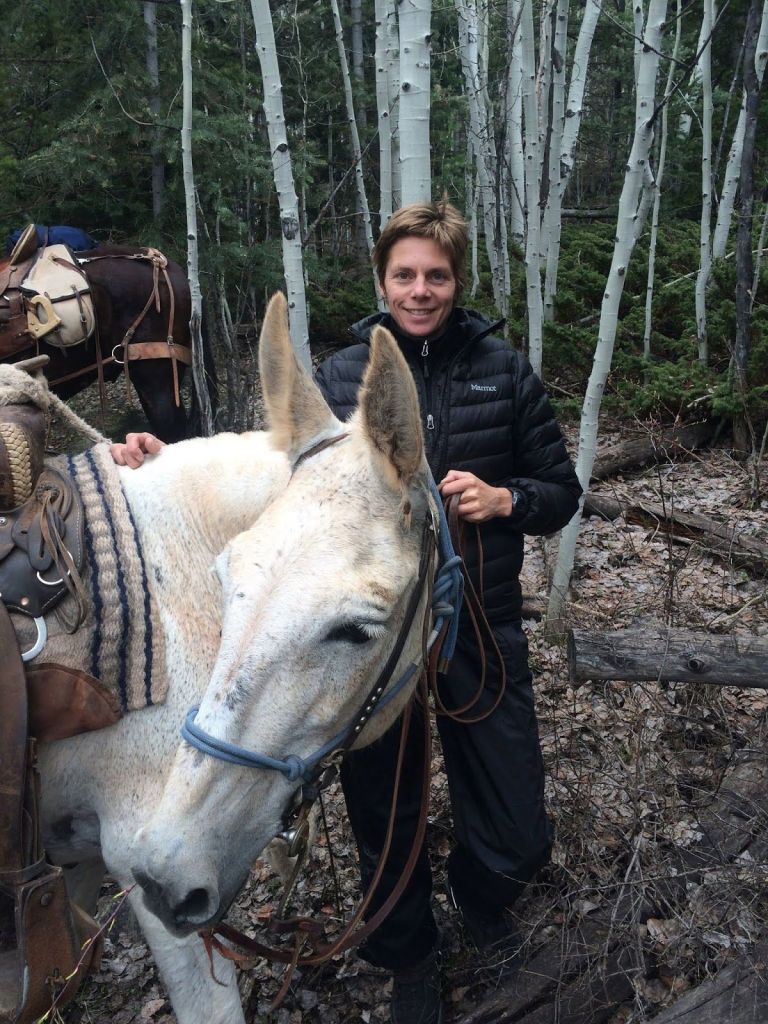
Me on Monroe Mountain

To me, however, that is the essence of working with lions:  it’s humbling at times. It’s not supposed to be easy when dealing with one of the most secretive large carnivores on the continent. Mountain lions are distributed from Canada to South America and one reason for that success is the ability to be invisible. When conditions are right, cats can cease to be flesh-and-blood animals and become an ethereal, ghosting presence on the land.

That was no small feat in this case:  This female lion successfully bested a group with combined 75 years of wildlife experience in addition to dogs, mules and a telemetry receiver. She showed us that no matter how powerful the dogs’ sense of smell, no matter how experienced the tracker, no matter the technology, this was her home ground. With her quiet defiance, she demonstrated unequivocally that we were but temporary interlopers in her realm. We had all the advantages but she won the game that day, fair and square.

And I wouldn’t have it any other way.

Addendum

This was the last time I got to work with Clint. He was a woodsman through and through, an unpretentious expert in the ways of Utah’s wildlife. Clint was one of the best houndsmen and cat handlers in the western US, guiding hunters and academic researchers for decades. The southern Utah landscape, the people of the state and the DWR lost a loyal and steadfast friend when Clint passed in October 2017 after a battle with cancer. He will be missed.