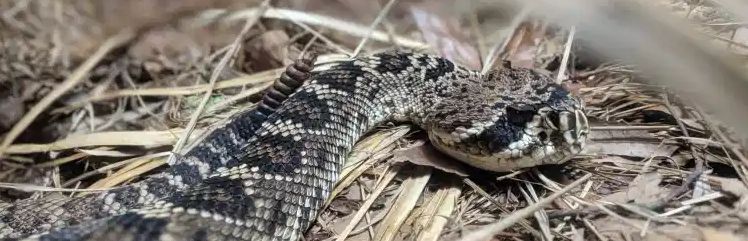
As a wildlife biologist who grew up in Texas, I read Orion magazine’s feature, A Uniquely American Animal, expecting the usual sad descriptions of the destructive and bloody rattlesnake roundup carnivals. Everyone knows that snakes suffer a withering animosity as old as humanity. It comes from the fear that our primate ancestors felt towards venomous, and legitimately dangerous, snakes. Every human across the globe shared these ancestors and this primeval fear has stayed with us. But over uncountable generations the fear has silently morphed, seamlessly arising as respect in some people and hatred in others.
The roundups and their casual brutality towards living things is, unfortunately, old news. I was unprepared for the invocation of lynching imagery, which I can only describe as indescribable. A discussion of the Gadsen Flag was unavoidable, given our political climate. In her descriptions of the rattlesnake images on war flags, or in song lyrics read by a madman, Natalie Rose Richardson paints the rattlesnake as the symbol of a violent nation.
This is not the first time that our society has faced the highjacking of symbology, though such things have greatly accelerated in the post-truth era. From hand gestures to ancient symbols like the swastika to an innocent cartoon frog, scholars, lawyers and creators have argued about who has the right to claim symbols or assign meaning to them.
Snakes carry more than their fair share of burden in this regard. The Bible famously casts ‘the serpent’ in an evil part. The aggressive, destructive impulses of manifest destiny and pulp westerns did much the same for rattlers. And, yes, in the 21st century, a radical and treacherous president even put himself in the role of rattler, implying that we should have known he was dangerous.
I raise my voice to speak for the snakes. Are alt-right rioters, tea party protestors and white supremacists sufficient to characterize a diverse and fascinating family of snakes? Do we allow racists, lynchers, and ecologically outdated human arrogance to personify more than 30 species of New World snakes, some of which are so rare as to only be found in a single county? As a stabilizing influence on rodent populations, these snakes have filled the role of successful predator for more than 12 million years. They deserve better.
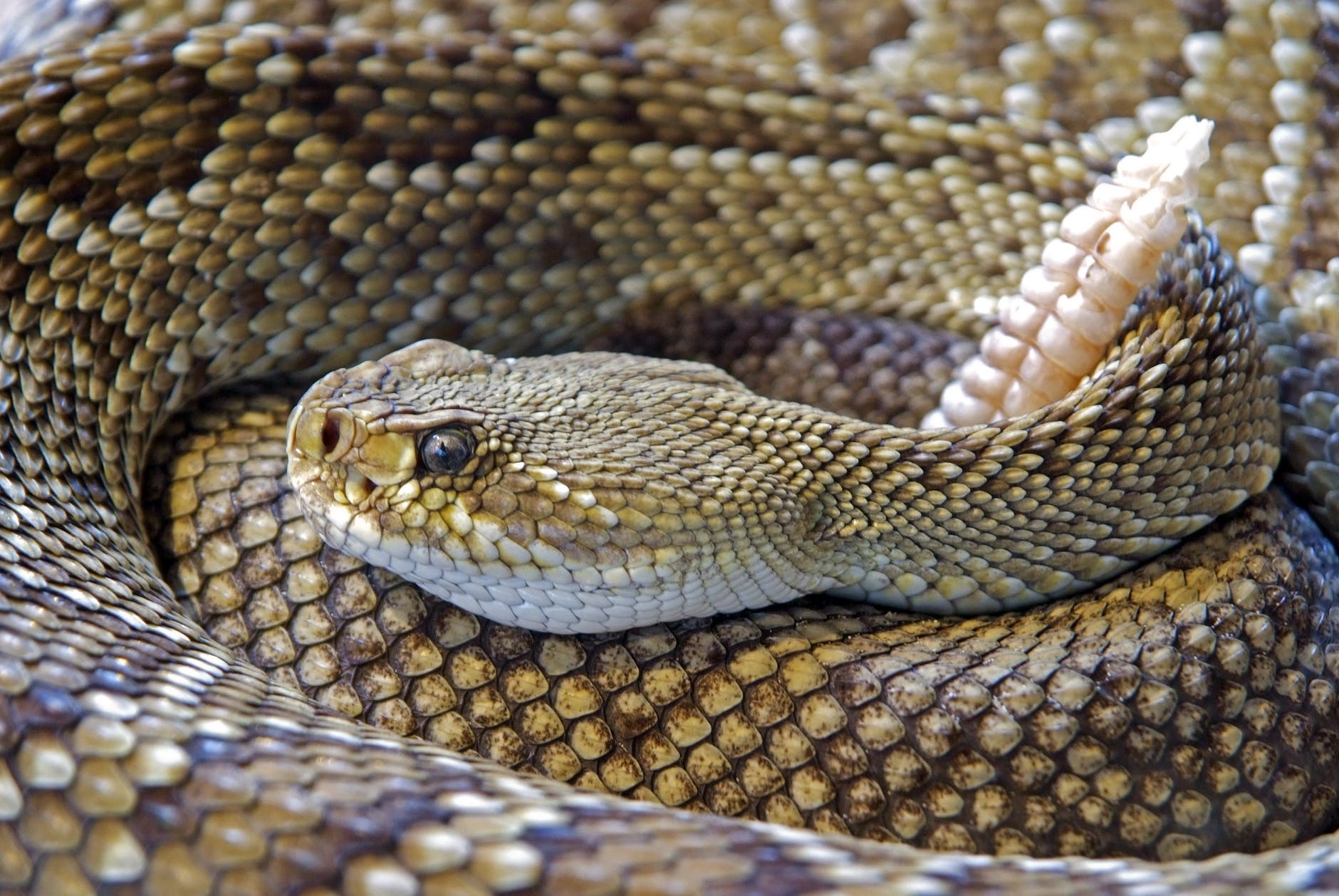
This obsession with casting the rattler as an aggressive beast is even less appropriate on closer examination. I have argued more than once, including to my grandmother who lived in mortal fear of even the suggestion that a snake was nearby, that rattlers are in fact the most polite of snakes. What is a rattle’s purpose if not to warn? Does the rattlesnake not say, in essence, “I’m here. Be careful; I do not wish to bite you but I will.”
The rattlesnake makes such a bold and distinct statement because this is serious business, to us and the snake. While Richardson mentions how economically expensive venom is, she can be forgiven for not understanding that producing venom is likewise energetically expensive for a snake. Injecting this precious substance into a rat is worth the cost because the rattlesnake gains a meal. Flooding a person or horse with venom is the last resort of a desperate and defensive snake because it represents wasted energy. It may come as a shock to many people, but rattlesnakes don’t want to bite us. They don’t want to be around us at all because we are of no use to them (they can’t eat us).
I’ve wandered Central American rainforests, peering cautiously under each log or pile of leaves to avoid stepping on a highly venomous – but rattle-free – fer-de-lance viper. These snakes, producing some of the most lethal venom in the world, provided no warning. Yet when I blundered into a field of tall, dry grass in Arizona, I was counseled not to proceed by a chorus of buzzing rattles. I knew exactly where the rattlesnakes were and I could keep a respectful distance, despite my inability to see them. I was, at that moment, very grateful that rattlesnakes make noise.
Rattlesnakes figure so large in the American mythos because they are truly wild. Unlike lions or tigers, or even Richardson’s cherished eagle, humans have never trained rattlesnakes. They can’t be relegated to distant mountain strongholds like grizzlies or wolves. We cannot befriend them, evidenced by the consistent annual count of people bitten when they purposely handle a loud, irritated, venomous snake. Rattlers resist any attempt at domestication. We rip out their entrails and we chop off their heads with machetes and we spray their habitat with flame because we cannot abide their success, persistence and independence. We kill them because we cannot win in any other way.
In conclusion, then, rattlesnakes do not represent the worst of humanity unless we accept that unfair characterization. These animals no more embody vicious extremism than a racist and horrifying postcard represents Temple, Texas, the community in which I grew up. The usurpation of these animals as symbols for violence is tragic as well as ill-fitting: Rattlesnakes hunt with professional silence, rattling only when needed to politely warn humans and livestock to keep their distance. They avoid unnecessary conflict. Many who exploit rattlesnake imagery seek to incite violence and gain notoriety. Though they may continue to invoke the images of these beautiful predators, they will never be worthy.
 TD's Good Ol' Blog