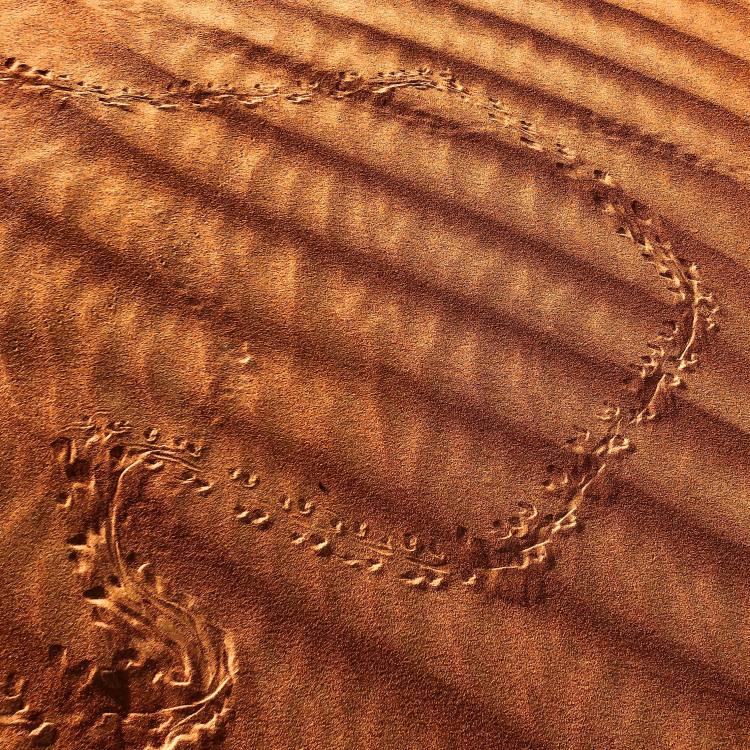
My Track and Sign Evaluation in Montana
I’ve been interested in wildlife tracking for many years. Early in my biology career, long before widespread online learning, my only tutelage came from hunting lore, cheap reproductions of 1970s-era military manuals, and tales of mountain men and native Americans.
In the beginning, I found the idea of tracking to be akin to magic. A skilled person could rise in the morning, cast a glance out the window, and know which animals passed nearby overnight – and even determine their behavior. I’ve not changed that initial opinion much over the decades. Tracking presents an unparalleled window into the natural world and is open to anyone who chooses to pay attention.
Paying attention, I should note, involves a lot of ‘dirt time’ – hours spent close to the ground, peering at disturbances in mud, dust, soil, or snow, closely examining bent grasses, leaves, scratch marks, rocks, and scat (scat in this context is a euphemism for animal poop; see ‘civilized’, below).
There are people who can scan a landscape and read the signs before them quickly and with ease, much like the birders who can sit on a park bench and identify hundreds of bird species by song. For the record, I am not one of those people. I require a lot of time and practice (see ‘dirt time’, above).
I’ve traveled from coast to coast for work. On average, the civilized residents of North America appear to consider playing in the dirt to be a strange, possibly suspicious activity for an adult. In more cultured environs, I noticed . . . discomfort. In the presence of a man sitting on a trail, staring at the ground, people shielded their children and joggers turned around. I tried to smile or say ‘hello’ but people fastidiously avoided eye contact as they scurried by.
Over my career, I did notice some variability. Hunters often respect tracking as a tool towards very practical ends, naturalists can be more philosophical about it, while many (though certainly not all) PhD researchers find statistics and satellite imagery much more applicable to the field of wildlife study than subjective interpretations of marks on the ground.
Most recently, as people poured outdoors due to COVID-19, my unpredictable positioning on the landscape and slow progress infuriated newly-dedicated bikers and gym-deprived runners. The obsession with exercising outdoors suggested a problem with anyone who wasn’t moving fast enough.
Over time I withdrew. I unconsciously internalized the idea that tracking was best done alone and, preferably, when no one was watching.
While on a job in Montana, I noticed a Track and Sign evaluation, offered through Cybertracker North America, was being held nearby. I was intimidated by the idea of subjecting myself to a potentially embarrassing public assessment, but I finally decided that I couldn’t pass up the opportunity.
I arrived in the Swan Valley with a worn, dog-earned track guide in my pocket and a head full of doubts. Over the next two days, I was continually amazed by the ability of those around me to read the land. That was somewhat predictable; I expected a skilled evaluator.
More surprising to me was Michelle’s infectious passion. She, along with staff from the Swan Valley Connections, the organization hosting the evaluation, didn’t see tracking as an eccentric hobby. They were natural resource professionals who extolled the virtues of tracking to anyone who would listen. These trackers didn’t hide. They tracked whenever and wherever they could, following trails in the evening or stopping to mark tracks on their way to work in the morning. They didn’t isolate themselves. These trackers welcomed people into their world and occasionally married each other. When I struggled during the evaluation, they supported me.
I was apprehensive to attend an evaluation, yet I walked away determined to attend additional sessions. I was profoundly affected by the experience. I learned a great deal about tracks, yes, but I was also stuck by my brush with something larger.
I’d become aware of many tracking schools and books and skilled instructors during my travels. Yet it wasn’t until I stood in what Wikipedia calls ‘an isolated valley between the Swan and Mission mountain ranges’ during Michell’s evaluation that I recognized the possibility of a tracking community that was as welcoming as it was challenging. I glimpsed a community that encourages complete neophytes and moderately-experienced oddities like myself, accepts them into the ranks along with the undeniable experts, and strives to raise everyone up.
I admit that my path has been, and continues to be, unconventional. However, I’m convinced that the importance of such a tracking community can’t be understated. I encourage anyone who practices this ancient skill (expertly or poorly), wants to encourage other trackers, or simply sees the value of tracking as a skill to bring people closer to nature, to support the efforts of the people and groups I’ve mentioned, including Cybertracker and Cybertracker North America, in any way that you can.
 TD's Good Ol' Blog